Sunday, December 29, 2019

Remembering Grandpa C.P. On Birthday 109.

Hope you all have been having wonderful Holidays! 

In addition to New Year's Day, we have Old-Calendar Christmas (aka Russian Christmas) coming up on January 7th, which we prefer to call Nativity of the Lord. Eastern Orthodox festivities associated with Nativity are full of old-world, joyful solemnity that is exquisitely beautiful, and yet reflects the poverty of spirit of Christ and his earthly family, as well as the countless generations of poor people over the centuries who have been touched by the Grace and Hope of Christmas. 

Marty and I are very casual about Western, Gregorian-Calendar Christmas on December 25th. Marty has fun wearing a Santa hat and lets his white beard get fluffy, and we like spending time with family, but we don't party or shop very much. The Brenneis family has a tradition of making ravioli. I usually bake pumpkin pies for the family and dairy-free breads (cranberry-orange, zucchini-walnut, banana, and pumpkin) for our home. I make batches of Martha Stewart's recipe for cranberry sauce with cognac. Also try to sneak some fish dishes into the family gatherings.

Speaking of fish, the main subject of this article was an avid fisherman. The day that I am writing this (December 28th) is the birthday of my maternal grandfather, Clarence Everett Pryne, known by friends and family as C.P.. He was born 109 years ago, in Eagle Township, Brown County, Ohio. He passed away in 1985, when I was 24, and I'm grateful for all the years of contact with him. The older I get, the more I identify with Grandpa C.P. In my opinion, I've always resembled him, both physically and in personality, more than any other relative. In a previous post from 2017, Mom's Home Town, and C-SPAN for Genealogy, I related some of my favorite memories of Grandpa C.P.

Here is a picture of Grandpa when he was about 3-1/2 years old. Grandpa's brother, Aaron, had died earlier that year of TB at age 6, so it had to have been a melancholy time in their home. He's dressed so oddly here and could easily be mistaken for a little girl, especially with the bow in his hair. Wish I knew the name of the dog.


Speaking of Grandpa being mistaken for a girl, here I am at age 5, already looking a lot like C.P.!


These days, I look a lot more like his mother, Great-Grandma Lou.
Even in her 50s, she had a mischievous look, didn't she?

Grandpa C.P. was a very dapper, yet fun-loving guy. Here we see him in the late 1930s, standing behind Grandma Dorothy and my mother, Bonnie.

This is a nice picture of C.P.(L) standing near a bright, shiny car with his wife's youngest brother, Elmer. We called Uncle Elmer "Whitey," because he was the only sibling in his family with blond hair.

Here are Grandma and Grandpa playing on the beach, probably shortly after they moved to California in 1951. Love this photo!

Here's a sweet family photo, probably also taken in the early 1950s. Pictured, L-R, are Bonnie (Mom), Grandma Dorothy, Grandpa C.P., and twins Joanie and Jimmy (the only person in this pic still living). Grandpa seems to be having the most fun, once again!

My memory has always associated trout with Grandpa C.P. and Grandma Dorothy (known by the kids as Grandma "Shug," short for "sugar"). They had a hillside get-away in the southern Sierra mountains, near Lake Isabella and the Kern River. Trips to our grandparents's get-away were called "going up the hill." Both nearby bodies of water were great places to fish, and my grandparents loved to go fishing! They had their favorite spots along the Kern, but they were not averse to taking a boat out on the lake to fish. Most of my memories fishing with them were on the river, and river trout has remained my favorite fish to this day.


C.P. "up the hill" in front of their mobile home in 1968,
having laid out the day's catch, by size.


In the early 1970s, Grandpa C.P. and Grandma Dorothy both retired from General Dynamics. They sold their place "up the hill" and bought a place in the Kern River Valley, right next door to Dorothy's older sister Elva. Here's a photo from the valley property, with C.P. apparently taking a rest after sawing some lumber for Aunt Elva, who stands behind him.


Aunt Elva was always one of my favorites, because she was another musician in the family and was always very welcoming to us. Elva had played piano for silent films when she was a teenager and also loved to sing in church. My mother's sister Joanie was a gospel singer, too. Mom could sing, but she was more of a music fan than a performer. Mom loved dance music, like big-band, rock, and country, but she had a set of classical music records and played them quite a bit. Mom got me started listening to Beethoven, Mozart, Brahms, and Tchaikovsky, and also let me have many years of music lessons. Mom didn't like Elva's piano playing, because she thought Elva "banged" on the keys. I liked playing Aunt Elva's piano because some of its notes were way off kilter, and I would make up tunes based on the worst of Elva's piano keys.

Sadly, Grandma Dorothy died in early 1975, just a few short years after they bought the valley homestead. She was only 58 years old (my age now), when she had a sudden, massive cerebral hemorrhage. She always seemed to be such a tough lady to all of us, but she wasn't taking her blood pressure medicine properly. Losing her was awful, just awful, and Grandpa C.P. spent the remaining 10 years of his life feeling rather lost.

Not long before Grandpa passed away, I talked with him on the phone for a while. I was finishing up four years of active Navy duty in Charleston, South Carolina (a lovely place!). He was not doing well physically and was living with my mother. We usually talked about what was in the news or on TV, as well as family stuff. During that call, Grandpa and I had our final conversation. The last thing I told him was that I loved him. When news of his passing reached me in Charleston, I was so grateful for the way our last conversation ended. 

We all need to end our conversations with expressions of love, because we may not speak to that person again.

A very blessed New Year to all!

Annie

"My grandfather once told me that there were two kinds of people: those who do the work and those who take the credit. He told me to try to be in the first group; there was much less competition." -- Indira Gandhi


Tuesday, October 29, 2019

Wildfires, Research Trek Report, and Project Updates!

Happy Autumn, Friends!

Marin County, like much of Northern California, is in a weather spell of low humidity and high winds, which greatly increases wildfire danger. Prophylactic shut-offs of our electricity have been inflicted upon us, in order to prevent downed power lines from sparking wildfires. We just got our power back last night.

Our utility company, Pacific Gas & Electric, has been under fire over problems with its aging natural-gas and electricity infrastructures, some of which have not been properly maintained or updated. PG&E's maintenance failures have been blamed for several explosions and wildfires in recent years, and the company is in the midst of bankruptcy proceedings. 

One aspect of the situation with PG&E that is not discussed much in the media is the company's inability to clear away trees and other foliage around power lines because environmentalists have prevented them from doing so. PG&E is not perfect, but when many of its customers demonstrate a preference for saving trees over human lives, it seems foolish to keep pointing the middle-fingers of blame in only one direction.

If you've ever been to Northern California, you have a pretty good idea why we love living here. The climate is relatively mild, there is a great deal of natural beauty that we treasure and work to preserve, and we value our neighbors and neighborhoods. The down-sides, such as the high cost of living and high taxes (somewhat mitigated by higher wages), do not outweigh the up-sides for most of us. 

Since I grew up in Southern California, in Los Angeles County (smog central!), I enjoy the much-cleaner air we have here (when there are not wildfires burning). I appreciate living in a place near the water with lots of beautiful trees, hills, and walking trails. It is also nice not to need air-conditioning in our house. If it gets hot (sometimes over 80ºF but rarely over 100ºF), we have ceiling fans upstairs. Most of the year the weather is on the cooler side in Marin County, but without the hassle of snow.
Me walking near the Golden Gate Bridge (barely visible in the background) during a nasty wildfire season last November. Yikes!

The only bummer for me up here is that most of the year we have much higher humidity than in So-Cal (but not as bad as back East!), so I'm frequently fighting frizz in my type-2 wavy hair. Right now, I'm enjoying my "frizz-free L.A." hair with the low humidity, but I could do without the dry skin that goes with it.

Speaking of "back East," early this month I returned from the research trip I wrote about in my last posting, Exciting Plans For Midwest Research This Fall!  Since I've gotten better at planning field-research trips, I was able to keep this one just under a month, even with several stops to visit family.


Walden and Sierra protesting my trip packing by laying all over my clothes!

Having entered I-40 East from my father's home in Barstow, it was a straight shot through Arizona, New Mexico, the Texas panhandle, and Oklahoma into Arkansas. 

One thing I always do when traveling through eastern Arizona is listen to the Navajo Nation radio station (you can hear it at this link: KTNN), which plays classic Country music, Navajo folk and Gospel music, tribal pieces, and commercials that are in both Navajo and English. Love it! 

Of course, in New Mexico, I have to stop for a bowl of local Chile Verde with sopapilla bread (like a puffed-up tortilla)!

It's always nice to take a get off the highway to take a drive through beautiful Amarillo, Texas, too!

One of the highlights of this trip was the opportunity to stay with my sister Denise at her charming home near Little Rock, Arkansas, both on the way East and then heading home West. Her husband Frank was in California still, working at his old job as he applies for new ones in the Little Rock area, so I didn't get to see him. But I was able to meet the newest member of their family, a wonderful tomcat named Rocky. Here is a photo of Rocky making a bed out of my legs, with Denise's other cat Midnight relaxing at my feet.
Like my striped PJs? They're the ones I bought to wear for a musical production of The Pajama Game that I was in a couple of years ago. Wearing them brings back fond memories of doing that show.

With plans to spend about a week in Northern Kentucky and Southern Ohio near Cincinnati, I booked a camp site at Blue Licks Battlefield State Park in Kentucky, which is the site of one of the final battles of the Revolution. The park is within 90 minutes' drive of every place I was visiting in the area, so it was perfect. 

Thing is, I sleep better outdoors in a tent than I do in a hotel room with TV and noisy neighbors to keep me awake, so camping is good for my productivity. There are usually good working showers and bathrooms. Blue Licks had a clothes washer and dryer, too! My tent goes up in less than 10 minutes and comes down in less than 5 (I don't leave it up when I'm not there), and it can withstand rainstorms with little-to-no leakage. On weekdays, campgrounds tend to be populated by RV-ers who have a culture of looking out for each other, and they are always friendly. Weekends bring families, but it's great to see the kids having outdoor fun, and the parents always rein them in by a reasonable hour.

My trusty tent, nicknamed "The Mobile Red-Roof Inn,"
pitched at Blue Licks Battlefield State Park.

Camping is soooooo good for my travel budget, too! The average site costs about $20 a night. Kentucky State Parks were running a special that week--pay for two nights, get the third one free. I stayed for six nights and loved it!

The main Public Library of Cincinnati was among my first research stops in Ohio. As in most large cities, parking is a pain in Cincinnati. I've learned from locals that it's free to park up in the Mount Adams section of the city, where there is a historic church right next to a staircase that takes you downtown in a short time. Here is my photo of the view of Cincinnati from the top of Mount Adams.

Walking down from Mount Adams is easy and beautiful. The challenge is hiking back up those stairs to where you parked! Next time I climb them, I'll count the stairs.

Before settling in the campground, I drove up to Dayton, Ohio to attend a wonderful hands-on class on cemetery monument cleaning and restoration/preservation at the beautiful Woodland Cemetery & Arboretum. The evening of the same day, I made my customary visit to the Ohio History Center in Columbus, this time to attend a special event highlighting medicine in the 19th Century that included displays of fascinating artifacts and some fun living-history presentations. Very enlightening!

Here's my certificate from the class at Woodland (yay!!!).


In future posts, I'll discuss my progress on the cluster studies I'm doing of two historic cemeteries in Southern Ohio. I had a productive visit with some people in Brown County, where the cemeteries are located, and obtained much information important to my studies.

One thing I always do in Brown County is visit two cemeteries of particular importance to my family. One is Winchester Cemetery, where my great-grandmother's twin brother and mother, both of whom died young, are buried, along with many other relatives. The other is Ash Ridge Cemetery, which was founded by my ancestors and is populated with a great many family members, including my great-grandfather, James Melburn Prine, buried next to his second wife, Madge Morgan (my great-grandmother Lorena Segondollar was his first wife, who is discussed in a previous post, Mom's Home Town and C-SPAN For Genealogy). Their headstones have a nice, healthy plant between them that is prone to overgrowth, so I take a few minutes to trim it each time I visit, so you can read their headstones again.
Before trimming the plant.
After trimming, to reveal James M. Prine (1886-1967) and Madge M. Prine (1903-1960),
inscriptions not very visible in this photo.

Kentucky treks included visits to Owenton and Frankfort to conduct research on my newly-verified 3rd-great-grandfather, Thomas Benton Ford (discussed in the previous post, A DNA Breakthrough and Conference News). More on him later!

I ventured into two more cemeteries to photograph the unmarked burial sites of the two great-uncles who served in World War I that I mentioned in the post, Exciting Plans For Midwest Research This Fall! Great-Uncle Elmer Durestes Romans (1896-1936) is buried near members of his immediate family at Highland Cemetery in Fort Mitchell, Kentucky. Elmer's wife, Essie Smith (1907-1966), is buried in Colorado (don't know whether she has a marker but will try and find out). Great-Uncle Alvin Thomas Romans (1899-1929) is buried with his wife, Marjorie Quinn (1904-1925), who predeceased him, at Spring Grove Cemetery in Cincinnati on a lovely hillside.


 Great-Uncle Elmer's burial site, between the two stones in the center
of this photo. Notice the surname on the stone on the left is "Angel."
😇
Great-Uncle Alvin and Great-Aunt Marjorie are buried on this hill,
about 10 feet in front of that large fir tree.

Both of these cemeteries are well-maintained and beautiful. I have contacted them and have been given the green light to arrange for the Veteran headstones. I have also written a song about these two great-uncles. My plan is to record the song, include it in a video about their WW1 service, and begin a campaign to raise the money the cemeteries will require to place the headstones. When the campaign is begun, I will publicize it on this weblog.

Heading out of the Cincinnati area, I stopped near Nashville to tour the beautiful Hermitage, Andrew Jackson's home. The audio tour of the grounds is excellent, and it's nice to take a break from driving to walk around. I recommend Tennessee-native Jon Meacham's biography of Jackson, American Lion, for which he won the Pulitzer Prize.

On the way back to Denise's house, I stopped in the Memphis area on a Sunday and attended Liturgy at the lovely Saint George Orthodox Church, where I made a few sweet friends and was allowed to sing in the choir.
 A nice photo of Saint George Orthodox Church,
from their website.

Another wonderful find in the Memphis area is the Germantown Regional History and Genealogy Center, where I spent a few hours looking through their stacks and chatting with a very nice lady who is a fellow member of the Daughters of the American Revolution. Anyone who is researching Southern family history should visit this library in Germantown!

Following another visit with Denise, I continued on to Missouri, stopping in Independence to tour the newly-refurbished Eisenhower Presidential Museum. This was my third visit, but I wanted to see the re-done museum. I highly recommend visiting this site, which includes a tour of Ike's charming boyhood home. There is a beautiful chapel on the grounds where Ike and Mamie are buried. So worth seeing!

In Kansas City, I visited the National World War I Museum and Memorial. Walking through it gave me an overall somber feeling over the brutality we can encounter in this world. Kind of the way I felt walking through the slavery sections of the African American Museum of History and Culture in D.C. when Marty and I were there last year. In my opinion, all Americans should visit both of these museums, and learn from them!

The rest of the way home, the weather turned colder but I didn't encounter any snow this time. I needed to stop in Salt Lake City (of course!), so I took I-80. Here is a photo I took during a leg-stretch in Utah. Gorgeous!

There was a lot to report, and this blog post is longer than I usually write, but I hope you've found it interesting!

Until next time, dear ones!
Annie

"Aim at heaven and you get earth thrown in. Aim at earth and you get neither." -- C.S. Lewis (from Mere Christianity, Chapter 3)


Sunday, September 8, 2019

Exciting Plans for Midwest Research This Fall!

Dear Friends:

As we approach Autumn, it has become my habit to embark upon some out-of-state research. It's a good time for road-tripping for many reasons. Hubby Marty "the Droid" is usually deeply embedded in a busy work season that starts in September and ends about mid-November. There are fewer vacationers on the interstates and in the campgrounds (have tent, will travel!). The weather cools down a bit and is not too stormy yet.

This year, before heading very far east, I'll be meeting Marty's mother Aida and sister Lisa, along with some friends who are more like family, at a cabin near Virginia Lakes in the Eastern Sierras, off Hwy 395 between Lee Vining and Bridgeport. It is a tradition to camp out there at the end of every Summer in celebration of Aida's birthday in late August. We spent Aida's 97th birthday this year closer to home, at Drake's Bay with a lovely beach picnic. Age has slowed Aida down a bit, but we still cannot keep her out of the woods, and we are all happy to follow her there!


Aida Link Brenneis, in her natural habitat!

After a few days off the grid and on the trails, I'll drive down to Barstow to pick up my father Richard and take him to his sister Beverly's house in Las Vegas, where we will be in the company of many cousins, as well. (Beverly is guilty of being the person who got me started with genealogy!) Dad and Aunt Bev are very close in age ("Irish twins"), the youngest siblings of four (five, if you count stillborn Aunt Alice), and they are the last Schaack sibs left. We lost eldest brother Howard last June at age 91. 

Once I get Dad back to his home in Barstow, I can immediately hop onto I-40 and start the eastward trek, heading toward my sister Denise's house in Arkansas for a visit/rest stop. 

Here's a quick run-down of current projects, for which I will be doing some foot-work for the next few weeks!

Mom's Memphis Connection
Before my mother's Pryne family moved to California in 1951, they had lived for some years in Olive Branch MS, just below Memphis TN. Since Memphis will be on my route from Denise's place to Kentucky and Ohio, I'll stop there to look for traces of their life in the Memphis area. There is a Genealogy Center in Germantown, a suburb of Memphis. Of course, I'll spend an evening on Beale St soaking up some blues music!

Cluster Studies In Progress
As part of my current of cluster studies of Pleasant Hill Cemetery and Straight Creek Baptist Cemetery in Ohio, I'll be attending a course in cemetery preservation in Dayton and also lectures in Columbus about medicine in the 19th century. I'll discuss these studies a bit more later, but you may be wondering what I mean by "cluster study." In genealogy, it's basically the study of a specific neighborhood through a period of time in history. A cemetery is a type of neighborhood (permanent neighbors, you could say). A cluster study of a region of Owen Co KY is ongoing, as well.

World War I Commemorations
The year 2019 marks the centenary of the close of the First World War. It is also the 100th anniversary of the founding of the American Legion, of which I am a member of Wilkins Post 37. Our Post also celebrates its centenary this year, because in 1919 we were the first Legion Post to be founded in Marin County CA. Our namesake, Marin County native Marine Corporal James Hepburn Wilkins Jr, was killed in France in 1918. There is also a street here in San Rafael named Wilkins, near the location where his boyhood home stood.


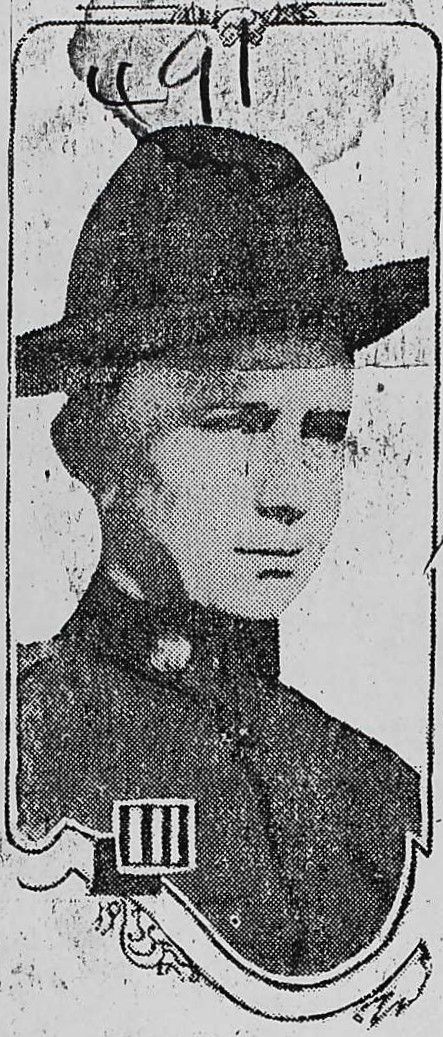
Corporal James Hepburn Wilkins Jr

Two younger brothers of my great-grandmother, Daisy Romans Marksberry, also served in WW1. Their names were Elmer Durestes Romans and Alvin Thomas Romans. (If you read my post from last June entitled A DNA Breakthrough and Conference News, you are already acquainted with my studies of their family, particularly their father J.T. Romans.) The Romans brothers joined different services--Elmer the Army and Alvin the Marine Corps--but they ended up in some of the same battles in France. They were both wounded several times, but they made it home. Elmer lost a leg. Alvin was able to accept a commission as 2nd Lieutenant in the Reserve Infantry. Tragically, they both died young of tuberculosis they contracted in France. 

PettyDL&E_RomansAlvin&Carl - Cropped
Army Private Elmer Romans with youngest brother Carl and maternal grandparents 
Durestes Lafayette Petty (a Confederate vet) and Elizabeth Hudgins Petty (family photo).

Alvin T Romans 96th Co
Marine Private Alvin Romans (family photo).

Along with an in-depth study of these two heroic great-great-uncles, I am working on securing for them Veteran's Grave Markers. Their grave sites are both known but have never been marked. Updates about this project are forthcoming!

Sites I will be visiting to learn more about the Romans brothers include the Kenton County Library in Covington KY, the National Archives in St Louis MO, and the World War I Museum in Kansas City MO. (More great music to be found in Kansas City, too!)

Gotta finish packing, as I leave tomorrow. Marty the Droid will hold down the fort at home, keeping the cats fed and their box sifted.

Blessings,
Annie

"For all the astounding growth in man's power, there had been no parallel increase in responsibility. The caveman with the club was now a caveman with a machine gun." -- John O'Farrell, An Utterly Impartial History of Britain (2007).


Monday, June 24, 2019

IGGC 2019...An Inspired Gathering Of Cousins!

Guten Tag, Freunde!

Earlier this month, from the 15th to 17th of June, the second International German Genealogy Conference (IGGC) of the International German Genealogy Partnership (IGGP) was held at the Hyatt Regency Hotel in Sacramento. This post is my review of the conference, but my viewpoint cannot be considered completely unbiased, because I am a board member of the host organization, the Sacramento German Genealogy Society (SGGS). The high regard in which I hold the organizers of this IGGC colors my review. I had helped a little with publicity for the conference but was not directly involved with its planning.

First, I must commend the organizers for their choice of venue. The location of the Hyatt Regency was ideal for the conference. The hotel is right across the street from the beautiful Capitol Park that surrounds our impressive State Capitol Building. A number of fascinating museums, Old Sacramento, the California State Library and Archives, the Historic City Cemetery, and several other historic sites are a short distance away from the Hyatt, accessible by light rail or even on foot.


The California State Capitol Building (Photo by California State Parks)


The Friday before the conference, June 14th, there were tours organized to some of the local attractions. I had the joy of escorting a group out to the Historic City Cemetery for a tour. The weather that day was perfect for such an excursion, and we genealogists are well known to be enthusiastic about cemeteries, so we all had a lovely time there.


Sacramento Historic City Cemetery (Photo by CSvBibra, Wikimedia Commons)

Friday evening, there was a Biergarten reception at the Sacramento Turn Verein, a beautiful German cultural center that is a real treasure with a rich history (read about it here: http://sacramentoturnverein.com/history/). It includes a library and several social areas complete with beer taps. The regular activities at the Sacramento Turn Verein include festivals, German language lessons, sports clubs, and music and dance groups. I did not attend the Biergarten, but I have visited the Turn Verein on many happy occasions. Musicians from the Turn Verein provided wonderful entertainment throughout the conference, including the skillful blowing of an Alpine horn at the opening session!

Speaking of the opening Plenary Session, at 7:45 a.m. on Saturday the 15th, the IGGC wasted no time drawing us into the rich German pioneer history of California, with visits from living-history figures that included Civil War soldiers, frontiers-men and -women, and the proprietor of that famous fort, John Sutter, himself!

All three days of the IGGC, there were wonderful keynote speakers over lunch, and I had made reservations to be at all three. Saturday's keynote was presented by IGGP and SGGS President Ingeborg Carpenter, a native of Germany with first-hand knowledge of the American immigrant experience. Her living-history characterization, in full costume, of a German woman in San Francisco and Sacramento during the Gold Rush was compelling and beautiful. It was my favorite of the three keynotes, which is saying something, because the other two speakers were the wonderful and immensely knowledgeable Michael Lacopo and Roger Minert! Dr Lacopo spoke about push and pull factors that brought Germans to America during the 18th Century, and Dr Minert offered details about German marriage and courtship practices that covered three centuries. So glad I attended them all!

A quick review of the food served by the Hyatt: The salads were excellent (fortunately) and so were the desserts (unfortunately). The house wines were good, and the cheese/cracker/fruit hors d'oeuvres for a reception were very nice. I was underwhelmed by the entrees, except for one that was a chicken Caesar salad. At the banquet Sunday night, the entree would have been fine, except everything on the plate was covered by a glaze that made me gag. I scraped off the glaze and ate some of it (the combination of German and Scottish blood in me detests waste). It would have been good without the glaze. Sauces on the side, people!

The speaker for the banquet was marvelous! I don't have her name written down, but I recall that she is an anthropologist who specializes in historic dress and has participated in living history at Sutter's Fort. She made her presentation in frontier-era dress that featured bloomers and stays (like a corset), discussing reasons and methods for wearing her outfit. It was very entertaining as well as fascinating!

It was rather difficult to choose sessions to attend during the day, because there were so many terrific choices! I decided to go hear mostly speakers I had not heard before, and of those my favorites were Wolfgang Grams (on German American migration), Ben Hollister (on German one-name studies), Nathan Machula (on researching provinces in the East), and Ute Brandenburg (on the travel companions of immigrants). I did attend presentations by familiar speakers, though, and I especially liked James Beidler's talk on German-Language newspapers (his new book on newspapers is a must-read!) and Bill Cole's session on storytelling and writing techniques.

This IGGC was of moderate size, but the hallways and small rooms that housed the society and vendor tables were not overly crowded. Of the vendors, I had particularly interesting chats with Michael Provard of FamilySearch and Mike Mansfield of MyHeritage, both of whom gave highly informative talks about their websites that I'm glad to have attended.

The first IGGC, which I did not attend, was held in 2017 in Minnesota. Every attendee from whom I heard descriptions of that conference stated that there had been a sense of "family reunion" there. At this second IGGC, I had a strong feeling of being surrounded by cousins, too. More than at any other genealogy conference I have attended, the mood was warmly collaborative and not a bit competitive. Not once did I feel as though I needed to get away from the people. I was drawn to them, and we all had beautiful experiences and exciting ideas to share. For me, the 2019 IGGC in Sacramento was a meaningful and memorable experience filled with learning and fun. 

When it was announced that the 2021 IGGC is slated to take place in Cincinnati, my excitement could not be contained. The breeding grounds of my mother's family, including the German line, from pioneer days forward, have surrounded the city of Cincinnati. I have been going back there to visit cousins and do research in the Fall for the last couple of years and plan to go back there this year, too. It will be great to be there with even more German cousins from around the world in 2021. Hope I will be able to convince a few of them to join me at Skyline for a plate of Cincinnati chili over spaghetti (what my mother called "chili-skett")!

A plate of Cincinnati-style chili. Looks good, doesn't it?
(Photo by Valereee, Wikimedia Commons)

Here's to many beautiful Summer hikes, without wildfires!
--Annie

"Man reist nicht, um anzukommen, sondern um zu reisen (You do not travel to arrive, but to travel)." -- Johann Wolfgang von Goethe


Tuesday, June 11, 2019

A DNA Breakthrough and Conference News

Welcome back, Readers!

Summer has not yet arrived on the calendar, but the heat wave we are experiencing in the Bay Area has aided my transition into full Summer mode! With another Midwestern road trip slated for September, lots of on-site research planning is happening at my desk. This year, a perk has been added to my back-east wanderings: my sister Denise and her husband Frank have bought a house in Arkansas! I already miss their former mountain home-base in Bishop, California, but now I have a great place for extended pit-stops on journeys to Cincinnati and beyond, with the added bonus of spending time with my wonderful sister and brother-in-law!


Frank preparing to give Denise "bunny ears." 
They are wonderfully insane. Can't wait to see them again!

Dismantling Some Masonry
One of the proverbial "brick walls" with which I have been contending in recent years involves my 2nd great-grandfather, John Thomas "JT" Romans. According to family legend, in 1858 JT's mother Angelina Romans had a late-teenage tryst with a boy named Tom Ford and found herself to be with child. Soon after his roll in the hay with Angelina, Tom Ford left town, supposedly to visit Europe.

The Romans family had a farm in Owen County, Kentucky at the time, and they had a good many neighbors with the surname Ford, who appear to have been rather well-to-do for the area, based on documents and county histories I have found. Perusal of the Federal Census of 1850 for Owen County showed one person named Thomas Ford, the son of Harbin (misspelled "Harlin") and Anna (spelled "Ann") Ford. One of the Owen County histories mentioned that young Tom, his mother Anna, and his sister Laura moved to Frankfort soon after the 1853 death of Harbin Ford so that Tom could attend a private school there. 

There continued to be a heavy Ford-family presence in Owen County following the relocation of Harbin's household, and those family ties are the basis for my suspicion that the widow and children of Harbin Ford made a number of 20-mile trips back to Owen County in the years following their move to Frankfort. It is possible that one of those visits provided the opportunity for this Tom Ford to get together with Angelina.

Due diligence required that I search for another possible baby-daddy named Tom Ford, so I dissected 1850 and 1860 census records for Owen County looking for clues that could lead to another Tom Ford but found no one else by that name. A search of census records for surrounding counties yielded only our original suspect living in Frankfort with his mother and sister in 1860.

Other neighbors of the Romans clan included the Martin family. They had a son named Elisha who must have been a generous young man, because he married Angelina in 1860, less than a year following the birth of little JT. In the 1860 census, the household of Elisha and Angelina Martin included JT, with the assumed surname of Martin. It may have been Elisha's intent to adopt and help raise JT. I've noticed that distantly related genealogy hobbyists who have included our Romans family in their trees have assumed that Elisha Martin was JT's biological father, but those of us who are JT's direct descendants have not believed that to be the case. 

Thomas B. Ford, left (Register of the KY State Historical Society, vol. 41, p 11)
and John Thomas Romans, right (from a family photo dated 1909)

In 1863, with JT only four years old, Angelina died and Elisha Martin volunteered for the Confederate Army. JT was left in the care of his grandparents, Shelton and Malinda Romans, in whose household he appeared on the 1870 census. When Elisha Martin returned from the war, he married Angelina's younger sister Zilpha and had a number of children with her, including a daughter they named Adeline, which had been Angelina's nickname.

JT's Romans grandparents had passed away by 1880. JT does not appear in the households of either Elisha and Zilpha Martin or Tom Ford in the 1880 census. 
In 1882, JT married his first wife Corinthia in a neighboring county. Corinthia died in 1888 without any surviving children that I have located. In 1889 he married my 2nd great-grandmother, Amanda Petty. 

JT and Amanda remained in northern Kentucky and raised a large family, including my great-grandmother Daisy. Census records state he worked as a farm laborer then later as a carpenter. JT fell victim to a common scourge of his time, tuberculosis, and died in a TB asylum in Texas at age 62. The informant for his death certificate was either Mrs. or Miss Anna Romans (wife Amanda's name might have been mistakenly written as "Anna," and he had a daughter named Anna), who evidently gave the name "Tom" as his father's name, which was written on the certificate as "Tom Romans." His mother's name was given as "Adeline Romans," using Angelina's nickname.

Next, I embarked upon a deeper study of our suspected paternal Tom Ford, whose full name was Thomas Benton Ford. Mr. Ford continued to reside in Frankfort following his schooling and became an attorney. He was also a published author of poetry and prose, as was his sister Laura. Because he was a man of some notoriety, I was able to find an article about him and Laura in a 1943 issue of the Register of the Kentucky State Historical Society, as well as mention of him and his family in a book entitled Owen County, Kentucky: History and Families. From these and a few other sources, I have been able to glean quite a bit of fascinating information about Thomas B. Ford, but no hints that he had left behind an illegitimate child in Owen County. 

The search for DNA evidence of paternity was my next step. Our Tom Ford did marry and by this wife had a son named Ellis, who died as a young adult without leaving any known children behind. Laura Ford married late in life and does not appear to have had any children, either. Tom and Laura were Harbin Ford's children by his second wife. Fortunately, Harbin's daughter Elizabeth by his first wife has had a long string of progeny, the lines of which I have traced down well into the 20th century. Ancestry DNA came to the rescue here, yielding two living cousin matches: One a half 5th cousin (male) and the other a half 4th cousin once removed (female), both descendants of Tom's half-sister Elizabeth!

These DNA matches constitute my first concrete piece of evidence that Thomas Benton Ford may be my 3rd great-grandfather. At the very least, it appears I have located the family of the mysterious Tom Ford. Research continues.

Recent L.A. Jamboree and upcoming Sacramento German Conference
A couple of weeks ago, I made one of my customary treks to the Los Angeles area to visit family and sneak in some research at the L.A. Central Library, one of my favorite haunts (see my article about it in the California Genealogical Society blog: The Genealogy Collection at Los Angeles Central Library). My time was limited, but I had to go check out the feted Genealogy Jamboree that was taking place in Burbank. I signed up for their free sessions on Friday morning, which were terrific, and had a chance to peruse the society and merchant booths.

Besides the free Friday sessions, Jamboree has a free mobile app that is very similar to the one that Roots Tech has. Like the Roots Tech app, you can use the Jamboree app to download all of the handouts from Jamboree sessions, whether or not you paid for or attended any of them! It's important to keep in mind that both Roots Tech and Jamboree make the handouts available for personal use only!

This coming weekend is especially exciting for many of us who do German genealogical research, because we will be enjoying the International German Genealogy Conference, which is being held in Sacramento, only a 2-hour drive from home! Of course, I will be writing about it on this very blog!

Annie

"Alles hat ein Ende, nur die Wurst hat zwei (Everything has an end, only the sausage has two)." -- German expression


Tuesday, April 23, 2019

The Pryne Twins at 80, Kentucky Klips, and More!

Happy Spring, Everyone!

The poppies are popping again out here in California. We had much more rain than usual this year, so we are having what they call a super-bloom season. Loving all the color! Wikipedia has posted this fabulous picture of a righteous coating of poppy-Cheeto-Dust on Walker Canyon in Riverside County (photo by Bluesnote):

Kentucky Klips, Plus!
One of the joys of doing genealogy is finding surprises in newspaper archives, and I've mined some real gems in recent weeks. The most important clippings found in this haul provide essential info regarding the month and year of the marriage of my maternal grandparents, Clarence Pryne and Dorothy Marksberry. My immediate family is not in possession of any documentation of their marriage, but on the 1940 U.S. Census my grandparents stated they were living in the same Covington, KY dwelling in 1935, and their first child--my mother Bonnie--was born in 1937. These facts provided the clue that they were married in 1935 or earlier. Their son, my uncle Jimmy, could not recall the date of their anniversary when I asked him recently, but he remembers seeing a photo of his mother in a wedding dress. Fortunately, now I have more clues!

The clip below is from the newspaper The Kentucky Post on March 28, 1934. It advertises a fundraising event for the local volunteer fire department. In the fourth paragraph of the article, my grandmother Miss Dorothy Marksberry and great-grandmother Mrs. Orin Marksberry (her name was Daisy) are listed as participants. The fifth paragraph states that my grandfather Clarence Pryne would be performing a specialty dance (he was known to be good at soft-shoe tap). From this clip, not only do I learn that my grandparents were not yet married in March of 1934, I also learn that my great-grandmother was probably a member of the Women's Auxiliary of the Elsmere Volunteer Fire Department! My great-grandfather and great-uncles may have been volunteer firemen, too.


This next clip from The Kentucky Post dated April 6, 1934 provides the society-column announcement about the Ladies' Auxiliary show in its second through fourth paragraphs. The article states that the show would take place Friday (April 6th was a Friday in 1934) at Lloyd High School, where my grandmother was likely a student. It is distasteful to read in the third paragraph that some men performed in black-face (hopefully Grandpa was not one of them!). Clarence Pryne (Grandpa C.P., as we knew him) is mentioned again as a dancer.

The most exciting find from my search of The Kentucky Post is this marriage announcement dated July 5, 1934. My grandparents are listed third. There is no exact date or place mentioned except for Kenton County, and I've yet to find an official record of their marriage, but my search has been narrowed considerably!


Nearly five years into their marriage, on April 21, 1939, Dorothy would give birth to boy-girl twins, James and Joan. Twins run on both sides of my grandfather's family--his mother Lorena Segondollar had a twin brother, and his father James Prine had a set of boy-girl twins by his second wife Madge. On April 22, 1939, The Kentucky Post printed a photograph of three nurses from St Elizabeth's Hospital holding three sets of twins that had been born there that week. The nurse on the right was holding the Pryne twins.

When I showed this picture to Uncle Jimmy last week, he did not remember seeing it before, and he also claimed he could not tell which baby was him, except to say that he was "the ugly one" (ha-ha!).

As you can tell from the date, Uncle Jimmy just celebrated his 80th birthday, but every year he mourns the loss of his twin Joanie, who died in 2001. Aunt Joanie and I bonded over music, as she was a gifted Gospel singer.

Here's another clip from The Kentucky Post dated June 10, 1950 in which there is a report about a picnic held at the home of my great-grandparents, Orin and Daisy Marksberry. The out-of-town visitors mentioned included Great-Grandma Daisy's brother Dr. Carl Romans and his family, who had come from Colorado. Grandma Dorothy's brother Ernest Marksberry, who was visiting with his wife Margaret, had moved in recent years from Kentucky to El Monte, California. My grandparents, mother Bonnie, and her twin siblings James and Joan (listed in the article after Ernest and wife) moved to California in 1951. Other members of the Marksberry family also would soon make the move to California, including sister Elva Riley and brother Elmer along with their families. Finally, Orin and Daisy would relocate to California in about 1957.

The article below is from the Riverside Independent Enterprise newspaper in California, dated September 22, 1960, and announces the celebration of Orin and Daisy Marksberry's 50th wedding anniversary. The article mistakenly lists the place of their wedding as "Tudlow," when in fact it was Ludlow, Kentucky. In the third paragraph are mentioned Mr. and Mrs. Clarence Pryne, Mr. and Mrs. Richard Schaack (my parents), and Mr. and Mrs. Roy McCullough (Aunt Joan and her husband), stating that they all lived in El Monte (probably not accurate, as I believe my parents lived in San Gabriel in 1960). By the way, Mom was 4 months pregnant with me at this time, and Joanie was 3 months along with my cousin Robin. In the second column of the article, Uncle Jimmy (Airman 2nd Class James Pryne) is noted to have been stationed in Germany with the Air Force. In the third column is listed Mrs. Lou Fugate, my grandfather's mother (the former Lorena Segondollar, now widow of George Fugate), who was living with my grandparents in El Monte.
Speaking of El Monte, California, that suburb of Los Angeles was to become quite an important location for our family. For a number of years, the family of Clarence and Dorothy Pryne resided there, and their children attended El Monte High School. My parents were married in Mom's parents' house in El Monte. My sister Denise and I were born in El Monte Community Hospital. We also lived in South El Monte for about 10 years. 

Any of you who remember the old Dr. Demento radio show may recall the following lovely (a-hem!) ditty about El Monte, performed by a raucous garage band called The Rubber Band and their leader Llyn Foulkes (you can hear it for yourself at this link: "El Monte" on Dr. Demento).

I live in a town in East L.A., it's not very big
but it's got lots of stores with stereos and things like that you dig.
I have a nice apartment, it's got a pretty good view.
I can see three service stations and the Long Beach Freeway, too.

Chorus:
El Monte, El Monte, there ain't no other place like it.
El Monte, El Monte, I tell ya' it ain't worth (honking sounds)!

We got a drive-in movie, it has three shows every night.
There's one playin' now with John Wayne, it's really out-a sight.
My wife likes all the drug stores, they have everything.
That's where I bought my outboard motor and her wedding ring.
(chorus)

Now if you come to East L.A., be sure to give me a call.
There's a couple of bowling alleys, we'll really have a ball.
We're just about a mile from Rosemead and a little bit north of Whittier,
and you might like the City of Industry but our town's a whole lot prettier.
(chorus)

James, Joan, and Bonnie Pryne about 1945
probably in Olive Branch, Mississippi
(I'll check with Jimmy regarding the location)

Christ Is Risen!!! He Is Risen Indeed!!! Alleluia!!!

A Joyous Easter Season to you all!
--Annie

"Don't criticize or judge other people--regard everyone else as an angel, justify their mistakes and weaknesses, and condemn only yourself as the worst sinner. This is step one in any kind of spiritual life." -- Blessed Seraphim of Platina


Two New Year's Road-Trippers and a Van.

See also my website,  https://anniebee4history.wixsite.com  and my other blog,  AnnieWritesAbout ! Happy, and Hopeful, 2021 to you all!! Mar...